Overview
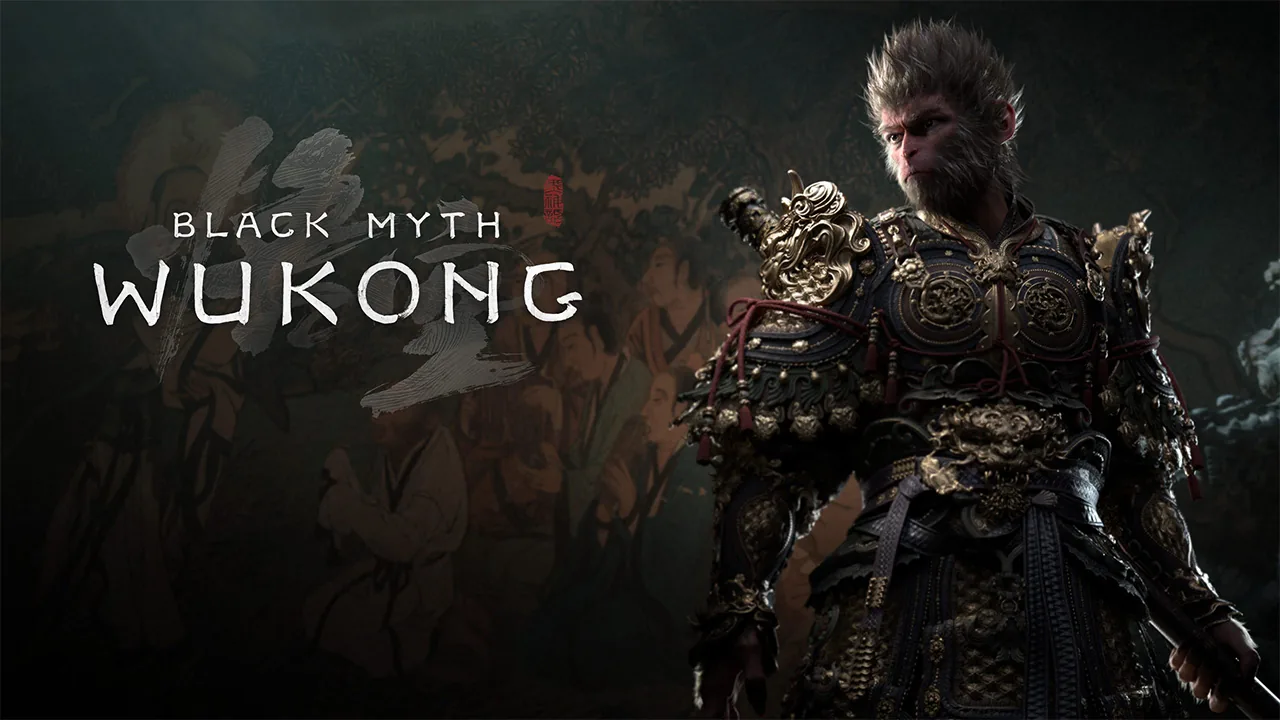
Black Myth: Wukong, released on August 20, 2024 by Game Science, achieved something genuinely unprecedented: the first Chinese AAA single-player action game to compete on equal footing with the world's best studios. Built in Unreal Engine 5, based on the 16th-century Chinese novel Journey to the West, and selling over 10 million copies in its first three days — 20 million by year's end — it announced a new era for Chinese game development with unmistakable force.
With a Metacritic score of 82 on PC and the Best Action Game award at The Game Awards 2024, Black Myth: Wukong delivers polished action, striking presentation, and memorable boss battles that rank among the finest the genre has produced.
Six Chapters of Mythological China
Black Myth: Wukong takes place after the events of Journey to the West. Sun Wukong — the legendary Great Sage Equal to Heaven — has already fallen. You play as the Destined One, a successor who descends to collect the shattered relics of Wukong scattered across a world of corrupted demons, ancient temples, and forgotten gods.
The game unfolds across six chapters, each set in a visually distinct region drawn from Chinese mythology:
- Chapter 1 — Black Wind Mountain: Dense forests, crumbling monasteries, the Black Bear Guai's lair. A stunning opening that immediately demonstrates the game's visual ambition and boss-fight philosophy.
- Chapter 2 — Yellow Wind Ridge: An expansive desert wasteland ruled by the Yellow Wind Sage. The game's largest open area and a memorable tonal shift toward desolation and scale.
- Chapter 3 — New Thunderclap Temple: Buddhism corrupted. A temple complex where zealotry and transformation intertwine in one of the game's most thematically rich chapters.
- Chapter 4 — The Webbed Hollow: A spider-demon realm submerged in darkness and silk. Polarizing for its traversal design but visually striking and lore-dense.
- Chapter 5 — Flaming Mountains: Fire-scorched terrain from Journey to the West's most iconic location, where every encounter carries mythological weight.
- Chapter 6 — Lingering Snow on Mount Huaguo: Wukong's origin. The emotional climax where themes of fate, freedom, and identity fully converge.
Each chapter could exist as a standalone setting in a lesser game. Together they form one of the most visually diverse action RPG experiences of recent memory.
Combat: Stances, Spells, and Transformations
Black Myth: Wukong's combat is built around three stances — Smash, Pillar, and Thrust — each with distinct attack patterns and rhythms. Switching stances mid-fight is the game's highest-skill expression, allowing players who master it to maintain continuous pressure while adapting to changing boss patterns.
The Focus Point system powers everything: landing hits builds Focus charges that unlock devastating charged attacks. Managing when to spend versus conserve Focus charges — especially during boss phase transitions — separates competent players from exceptional ones.
Spells add a second layer of identity:
- Immobilize — freeze enemies and bosses, opening guaranteed punishment windows
- Cloud Step — enter an invisible clone state that confuses enemy AI
- A Pluck of Many — summon clone staffmen for area disruption
- Ring of Fire — environmental control tool effective in confined arenas
- Wandering Wight — transform into a slain enemy type for alternate combat options
The game's most celebrated mechanic is transformation. Defeating certain bosses captures their spirit, allowing the Destined One to fully transform into that enemy — complete with its own moveset, separate health pool, and combat rhythm. Transforming into the Red Loong mid-boss fight, breathing fire and striking with a dragon's power, delivers a thrill no other action RPG currently offers.
Boss Design: The Undisputed Highlight
Critics and players universally agree: the boss fights are Black Myth's greatest achievement. With over 80 bosses — including hidden optional encounters — the game offers more memorable confrontations than nearly any action title in recent memory.
Boss fights are multi-phase with cinematic transitions that rival the best the medium has produced. The Yellow Wind Sage's sandstorm phase. Elder Jinchi's flaming corruption reveal. Erlang Shen's divine authority and calculated vulnerability. Each major confrontation is a self-contained spectacle designed around learning and adaptation rather than brute-force damage output.
Optional hidden bosses — rewards for thorough exploration — are some of the game's most demanding and satisfying encounters. Finding them requires environmental attention rather than map icons, making discovery feel genuinely earned.
Difficulty sits meaningfully between Sekiro and Elden Ring: harder than most action games, more forgiving than pure Soulsborne. Death carries no resource penalty — you respawn at the last Shrine with all stats intact. Nearby enemies respawn, but there is no cruel currency-loss-on-death mechanic. Learning through repetition feels less punishing while the tension of difficult encounters is preserved.
Unreal Engine 5 at Its Visual Ceiling
Black Myth: Wukong is the most technically impressive game built on Unreal Engine 5 at its release. Nanite geometry renders individual leaves and bark textures at distances that should not be achievable. Lumen global illumination bathes every scene in light that shifts believably with weather and time. The result is a game that regularly provokes genuine awe.
Environmental diversity showcases the engine's range: bamboo forests with individual stalks swaying under wind simulation; snow-capped mountain passes with accumulation on every surface; underground caverns lit by bioluminescent creatures; desert wastelands with real-time sand particle physics. Wukong's fur simulation alone represents a technical achievement — individual strands respond to movement, wind, and environment.
On PC, maximum visual fidelity requires high-end hardware. At 4K with ray tracing, an RTX 4090 is necessary for consistent 60fps. At 1440p without ray tracing, an RTX 3080-class card achieves smooth performance. The game supports DLSS 3, FSR 3, and XeSS upscaling with Frame Generation — essential for players on lower-tier hardware.
The PS5 version offers three modes: Performance (60fps/1440p dynamic), Quality (30fps/4K), and Ray Tracing (30fps with RT). Performance mode is the recommended PS5 experience.
Story and Cultural Significance
Journey to the West is one of the most significant works of Chinese literature — a 2,000-page epic about a Buddhist monk's pilgrimage accompanied by the rebellious Sun Wukong. Its themes — freedom versus constraint, enlightenment versus ambition, divine authority versus mortal will — provide Black Myth: Wukong with thematic depth that purely original settings rarely achieve.
The game explores what it means to be predestined. The Destined One is shaped by forces beyond their control. Wukong's relics carry power but also the weight of a life already lived and lost. Each chapter reveals another layer of the world's mythological tragedy.
Beyond the game itself, Black Myth: Wukong represents a watershed moment for Chinese game development. Game Science demonstrated that Chinese studios can compete technically and creatively with FromSoftware, Santa Monica Studio, and Naughty Dog. The game's success triggered a wave of announced Chinese AAA projects, earned Chinese government recognition as a cultural export, and drove measurable tourism increases to filming locations in Shanxi and Zhejiang provinces.
What Holds It Back
Black Myth: Wukong has genuine weaknesses. The narrative is difficult to follow without source material familiarity — Chapter 4's spider-demon realm receives consistent criticism for pacing problems and limited enemy variety. The camera struggles in tight corridors during boss fights. Exploration between boss encounters feels limited compared to Elden Ring's reward density.
There is no multiplayer — entirely single-player. At launch, PC performance suffered from severe shader compilation stuttering during the first hour; patches released in late 2024 resolved most issues but early reviews reflected a rougher experience than the final patched product.
Final Verdict
Black Myth: Wukong delivers what its legendary 2020 reveal trailer promised: visually extraordinary, boss-fight-driven action built from Chinese mythology at a production level that commands global respect. Its transformation system is unique. Its boss roster is exceptional. Its visual presentation sets a benchmark.
Its weaknesses — narrative density, limited exploration, Chapter 4 pacing — are real but secondary to what it achieves. This is Game Science's debut. The craft already on display suggests what comes next from this studio will be something remarkable.
Score: 9/10 — A stunning debut that rewrites expectations for Chinese game development and sets a new visual standard for action RPGs.
System Requirements
PC Requirements
| Spec | Minimum (1080p / Low / 30fps) | Recommended (1080p / High / 60fps) | High (1440p / Ultra / 60fps) |
|---|---|---|---|
| OS | Windows 10 64-bit | Windows 10 64-bit | Windows 10/11 64-bit |
| CPU | Intel Core i7-9700 / AMD Ryzen 5 5500 | Intel Core i7-9700 / AMD Ryzen 5 5500 | Intel Core i7-9700+ / Ryzen 5 5600X+ |
| RAM | 16 GB | 16 GB | 16 GB |
| GPU | NVIDIA RTX 2060 / AMD RX 5700 XT (8GB VRAM) | NVIDIA RTX 2080 Super / AMD RX 6800 XT (10GB VRAM) | NVIDIA RTX 3080 / AMD RX 7900 XT (16GB VRAM) |
| VRAM | 8 GB | 10 GB | 16 GB |
| Storage | 130 GB SSD | 130 GB SSD | 130 GB NVMe SSD |
VRAM Note: Black Myth: Wukong has unusually high VRAM demands — 8GB cards will experience texture pop-in at High settings. Use DLSS 3 (Nvidia), FSR 3 (AMD), or XeSS (Intel) with Frame Generation to achieve stable 60fps.
PS5 Modes
| Mode | Resolution | Frame Rate | Ray Tracing |
|---|---|---|---|
| Performance | 1440p Dynamic | 60 fps | No |
| Quality | 4K | 30 fps | No |
| Ray Tracing | 4K Dynamic | 30 fps | Yes |
PS5 Recommendation: Performance mode is the best choice — smooth 60fps with still-excellent visuals.
Frequently Asked Questions
Is Black Myth: Wukong a Soulslike game? Not exactly. It borrows some Soulslike conventions — difficult boss fights, checkpoint shrines, deliberate combat — but it is more accessible than Dark Souls or Elden Ring. No resource loss on death, more frequent checkpoints, and a Focus-based combo system make it its own distinct genre.
How long is Black Myth: Wukong? The main story takes approximately 25-35 hours on a first playthrough. Finding all optional bosses and collectibles extends this to 45-60 hours.
Is the game available on Xbox? As of 2024-2025, Black Myth: Wukong is available on PC (Steam/Epic) and PlayStation 5. The Xbox version was delayed and had not released as of early 2025 — check current status before purchasing.
Do I need to know Journey to the West to enjoy it? Familiarity helps, but is not required. The game tells its own story. Brief background reading on Sun Wukong's legend enriches the experience significantly.