Overview
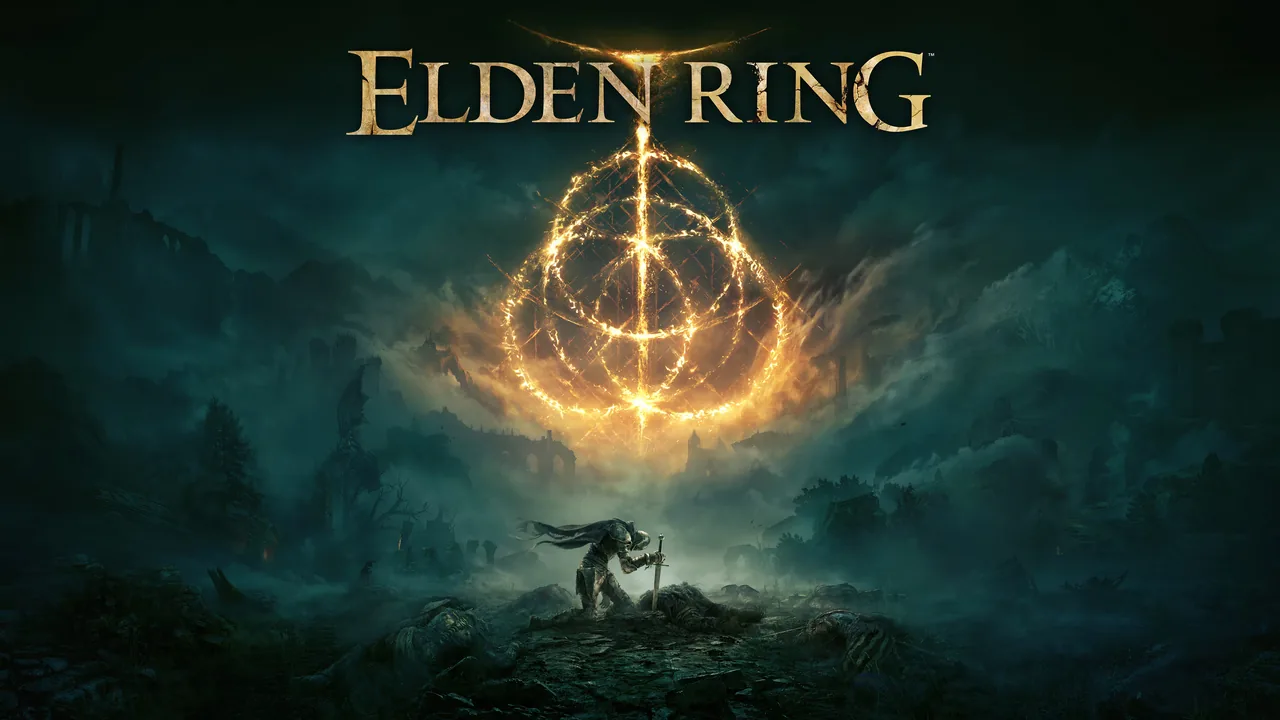
Elden Ring, released on February 25, 2022, is FromSoftware's most ambitious project to date — a collaboration between director Hidetaka Miyazaki and novelist George R.R. Martin that produced what many critics and players consider the greatest action RPG ever made. With a 96/100 Metacritic score and near-universal Game of the Year 2022 recognition from IGN, GameSpot, Eurogamer, and The Game Awards, it surpasses every expectation set by Dark Souls, Bloodborne, and Sekiro.
Selling over 25 million copies by mid-2024, Elden Ring is a cultural landmark that attracted millions of first-time FromSoftware players while simultaneously rewarding veterans with the deepest, most build-diverse, and lore-rich world the studio has ever constructed. It is not merely a great game — it redefines what open-world action RPGs can be.
The Lands Between: A World Worth Getting Lost In
Every open-world game promises exploration. Elden Ring delivers on that promise in ways most competitors cannot conceive. The Lands Between stretches from sun-bleached coastal cliffs through plague-ravaged wastelands, into a towering golden capital, beneath the earth into underground rivers and ruined civilizations, and ultimately to the collapsing peaks where fate is decided.
Where most open-world games fill space with waypoints and quest markers, Elden Ring fills it with purpose. Every dungeon, catacomb, and hidden cave is hand-placed, individually designed, and rewards genuine curiosity. There are no meaningless map icons. A glowing structure on the horizon is always worth reaching. A corpse clutching an item in an apparently unreachable location always has a hidden path leading to it.
The underground world is equally remarkable. Players who discover the Siofra River for the first time — expecting a small dungeon and instead finding a vast illuminated underground civilization with its own atmosphere, ruins, and history — understand immediately why critics ran out of superlatives. This hidden depth beneath an already-enormous overworld exemplifies the game's core philosophy: the more you look, the more there is.
Six major legacy dungeons — Stormveil Castle, Raya Lucaria Academy, Volcano Manor, Leyndell Royal Capital, Crumbling Farum Azula, and Miquella's Haligtree — each function as self-contained masterclasses in interconnected level design. These are not filler palaces. They are dense, shortcut-rich environments featuring some of the finest enemy placement and encounter design in the Soulsborne catalog.
Combat and Build Variety: The Deepest System in the Series
Elden Ring's combat retains the deliberate, punishing foundation that defines the Soulsborne genre. Stamina management, dodge roll timing, parry windows, and guard counters remain core — but what sets this entry apart is the extraordinary range of viable builds.
With over 300 weapons, fully customizable Ashes of War (weapon skills swappable across compatible weapons), eight investable stats, hundreds of sorceries and incantations, and the Spirit Ash summon system, no two playthroughs need feel alike:
- A Strength build wielding a colossal greatsword that staggers everything it touches
- A Dexterity/Arcane katana build optimized for bleed buildup
- A pure Sorcerer nuking bosses from range with Comet Azur
- A Faith/Arcane dragon-communion build that transforms mid-combat into something monstrous
The Ashes of War system is the single biggest advancement in FromSoftware combat design since Bloodborne's trick weapons. Attaching "Bloodhound's Step" or "Thunderbolt" to a compatible weapon transforms how it functions in battle. Builds feel personal in a way previous Souls games never achieved.
Spirit Ashes — AI summons available in boss arenas — deserve special mention for accessibility. They meaningfully lower the skill floor without trivializing the game for veterans. Players who bounced off Dark Souls years ago can complete Elden Ring's story. Veterans who refuse summons face a brutal, pure test of skill. Both experiences are valid and fully supported by the design.
The Boss Roster: The Greatest in FromSoftware History
Elden Ring fields the finest collection of bosses the studio has ever assembled.
Margit the Fell Omen teaches deflect timing and positional patience before the first legacy dungeon. Rennala, Queen of the Full Moon is among gaming's most visually stunning fight designs. Morgott the Omen King recontextualizes every Margit encounter with devastating effect. Maliketh the Black Blade moves with terrifying speed. Godfrey, First Elden Lord, delivers raw fighting-game energy.
And then there is Malenia, Blade of Miquella — optional, towering in difficulty, beautiful in design, and famous far beyond gaming communities as the hardest boss FromSoftware has ever created. Her second-phase flower bloom animation and lifesteal mechanic that punishes even blocked hits became gaming legend. The player known as Let Me Solo Her — naked except for a pot on their head — defeated Malenia thousands of times on behalf of struggling players and became a genuine cultural phenomenon, earning recognition from Bandai Namco who sent them a commemorative physical sword.
This is the cultural weight Elden Ring carries. Its best moments escape the medium entirely.
Story and Lore: The Shattering
George R.R. Martin constructed the historical mythology before the game begins — the reign of the Erdtree, the marriage of Radagon and Marika, the Night of the Black Knives, the Shattering of the Elden Ring. Miyazaki's team built the present-day narrative on top of this framework, producing the richest lore FromSoftware has ever achieved.
You are a Tarnished — a disgraced exile — called back to the Lands Between after the Elden Ring was shattered. Your goal: collect Great Runes from demigod Shardbearers, enter Leyndell, and become Elden Lord.
The story is delivered in the Souls tradition — item descriptions, NPC dialogue, environmental detail — but at a depth previous entries never reached. Ranni the Witch's questline spans multiple regions and hidden NPC interactions across the entire game, revealing a centuries-spanning conspiracy and culminating in an ending that questions the foundations of the Golden Order. Many players who experience it rank it among the greatest narrative questlines in action RPG history.
Six endings await players: standard Elden Lord, Ranni's Age of Stars, Goldmask's Golden Order, the haunting Frenzied Flame for players who collect every finger-mark, and more. Each carries distinct emotional weight.
Shadow of the Erdtree: The Gold Standard for DLC
Released June 21, 2024, Shadow of the Erdtree earned a 95/100 Metacritic score — the highest-rated DLC of all time. It is not a routine content drop. The Land of Shadow is a full additional region comparable in size and density to Limgrave through Altus Plateau, featuring eight new legacy dungeons and a massive interconnected open area.
The Scadutree Fragment scaling system prevents players from over-leveling past the new content, forcing genuine engagement with exploration. Messmer the Impaler is immediately recognized as one of the finest bosses FromSoftware has ever designed — his fire-and-serpent moveset, lore significance, and cinematic presence place him among the all-time greats.
The DLC's story reveals Miquella's true nature: not the passive savior the base game implied, but a divine manipulator who dragged beloved figures into his realm against their will. This revelation reshapes understanding of the entire base game.
Visuals, Soundtrack, and PC Performance
Elden Ring's art direction is exceptional at every scale — shifting between golden-hour pastoral beauty in Limgrave, apocalyptic horror in Caelid, gothic grandeur in Leyndell, and alien beauty in the underground rivers. The soundtrack, led by Yuka Kitamura, is built for emotional precision: Margit's theme builds layered dread, Malenia's theme is hauntingly beautiful, Radahn's is epic and grandiose.
PC performance at launch was a genuine problem — frame pacing stutters and inconsistent framerates plagued the initial release. Subsequent patches improved stability substantially, and the 2024-era PC version runs acceptably on modern hardware, but PS5 and Xbox Series X remain technically smoother experiences.
Is Elden Ring Too Hard?
The honest answer: hard, but more accessible than its reputation suggests.
The open-world structure allows sequence-breaking impossible in linear Souls games — struggling against Margit, explore more of Limgrave and return with better gear. Torrent's mounted combat trivializes many field bosses. Spirit Ashes provide substantial AI help in boss arenas. The flask system is generous by Souls standards.
The first three to five hours carry the sharpest difficulty spike. Once the core rhythm — patience, observation, deliberate aggression after safe windows — is internalized, the game becomes deeply satisfying. Most players who push through that initial wall report they could not stop playing.
Final Verdict
Elden Ring is the benchmark against which open-world action RPGs will be judged for years. It combines everything FromSoftware learned across fifteen years and six prior titles with a world that rewards every approach — explorer, lore reader, build experimenter, hardcore challenger — at the highest possible level.
Its 96/100 Metacritic score reflects accurate critical consensus. Shadow of the Erdtree confirmed the base game's quality was no accident. If you play one action RPG this decade, make it Elden Ring.
Score: 10/10 — A landmark achievement. The Lands Between will stay with you long after you have set the controller down.
System Requirements
PC Requirements
| Spec | Minimum (1080p / 30fps) | Recommended (1080p / 60fps) | High (1440p / 60fps+) |
|---|---|---|---|
| OS | Windows 10/11 64-bit | Windows 10/11 64-bit | Windows 10/11 64-bit |
| CPU | Intel Core i5-8600K / AMD Ryzen 5 3600X | Intel Core i7-8700K / AMD Ryzen 5 3600X | Intel Core i7-8700K+ / Ryzen 7 3700X+ |
| RAM | 12 GB | 16 GB | 16 GB |
| GPU | NVIDIA GTX 1070 8GB / AMD RX 5700 XT 8GB | NVIDIA RTX 2080 / AMD RX 6800 XT | NVIDIA RTX 3080 / AMD RX 6900 XT |
| Storage | 60 GB SSD | 60 GB SSD | 60 GB NVMe SSD |
| DirectX | DirectX 12 | DirectX 12 | DirectX 12 |
Note: SSD is required — HDD causes very long load times and may trigger texture pop-in. PC launch had frame pacing issues, significantly improved via patches.
Console (PS5 / Xbox Series X)
| Mode | Resolution | Frame Rate | Ray Tracing |
|---|---|---|---|
| Performance | 1440p Dynamic | 60 fps | No |
| Quality | 4K | 30 fps | No |
| Ray Tracing | 4K Dynamic | 30 fps | Yes |
Frequently Asked Questions
How long is Elden Ring? A first playthrough focused on the main story takes approximately 50-60 hours. Completionists exploring everything including optional dungeons, questlines, and the Shadow of the Erdtree DLC will easily exceed 120 hours.
What is the best starting class for beginners? The Vagabond is widely recommended for newcomers — it starts with high Vigor and a shield, making early combat forgiving while learning the systems. The Wretch (starting with nothing) is for experienced players who want complete build flexibility from the start.
Is Elden Ring connected to Dark Souls? No. Elden Ring is a standalone world with no direct narrative connection to Dark Souls, Bloodborne, or Sekiro. The tone and gameplay philosophy are shared, but the lore is entirely separate.
Do I need to play Dark Souls first? No. Elden Ring is the best entry point into FromSoftware's catalog for new players — it is the most accessible and the most content-rich.