Overview
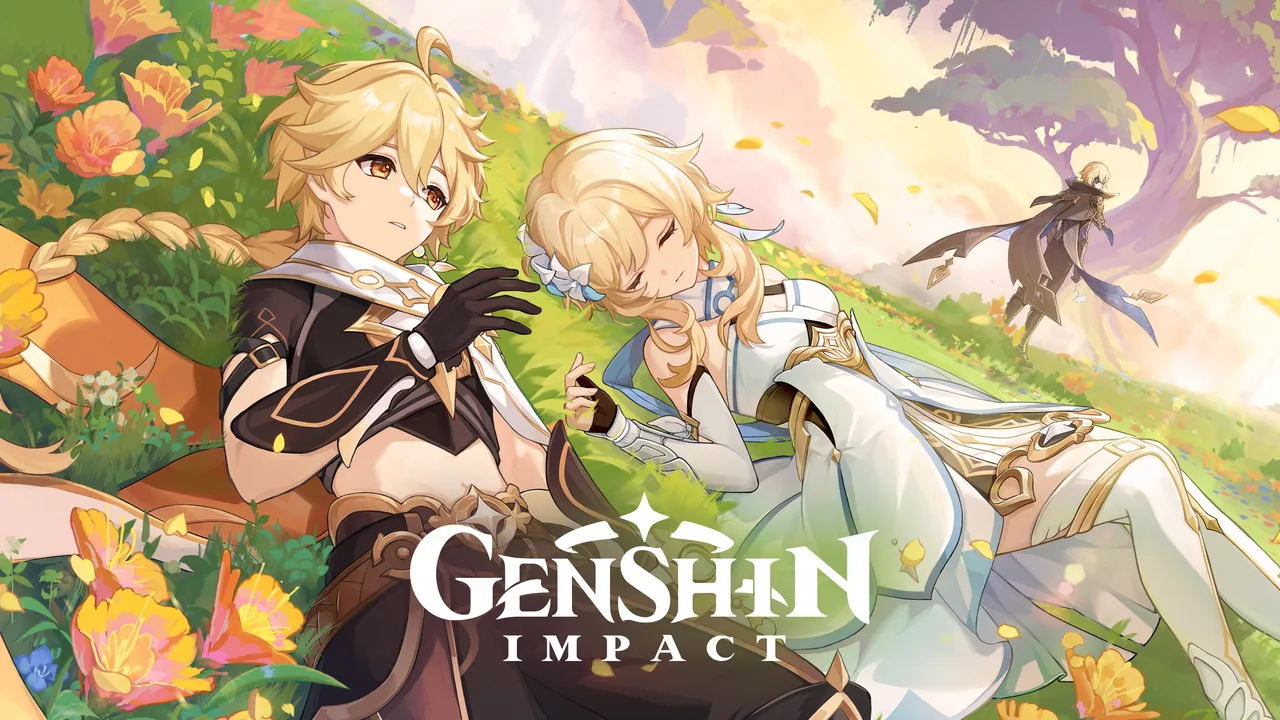
When HoYoverse released Genshin Impact on September 28, 2020, few expected a free-to-play mobile game to become one of the most culturally significant RPGs of the decade. Five years later, the game has grossed over $5 billion in revenue, expanded across seven distinct nations, and built one of the most passionate player bases in live-service gaming.
With a Metacritic score of 84/100 on PC and a premium production quality that sets the benchmark for free-to-play RPGs, Genshin Impact raises the standard for cross-platform RPGs through strong combat, polished content cadence, and visuals that defy its zero-dollar entry price. This review covers everything: the open world, the gacha system, F2P viability, the 2024 Natlan expansion, and an honest verdict on whether it is worth starting in 2025.
Open World Exploration: Genuinely Rewarding
Genshin Impact's core gameplay is built around open-world exploration across the continent of Teyvat. Each of the seven released nations is massive, detailed, and mechanically distinct:
- Mondstadt — windswept European fantasy with pastoral hills and ancient ruins
- Liyue — Chinese landscape inspiration with ink-wash mountain silhouettes and harbor commerce
- Inazuma — a closed island nation suspended in political resistance and eternal rain
- Sumeru — rainforest-and-desert biome with a mushroom-based traversal mechanic and a university city built on forbidden knowledge
- Fontaine — underwater-capable Victorian waterworld with courtroom drama and crystalline teal architecture
- Natlan — the most recent region (v5.0, August 2024), a pyro-infused landscape with dinosaur-inspired Saurian companions and a new Phlogiston traversal mechanic
Exploration is genuinely rewarding. Hidden puzzles, Oculus collectibles that boost stamina, underground cave systems, and environmental storytelling are densely packed across every map. HoYoverse consistently expands the map vertically — underground cavern systems added in Sumeru and Fontaine alone rival the surface area of earlier nations.
Combat: Elemental Reactions Are the Core
Real-time action combat using a party of four characters is the game's mechanical foundation. The elemental system — seven elements (Pyro, Hydro, Cryo, Electro, Anemo, Geo, Dendro) — creates chemical-style reactions when elements combine:
- Hydro + Cryo = Freeze (immobilize enemies)
- Pyro + Electro = Overloaded (explosion damage)
- Dendro + Hydro + Electro = Bloom/Hyperbloom (seed-based explosions)
- Anemo + any element = Swirl (area spread)
Building teams around elemental synergies — rather than raw damage numbers alone — is the game's central strategic layer and one of the most satisfying combat design systems in modern RPGs. A Hyperbloom team featuring Nahida, Xingqiu, Kuki Shinobu, and Raiden plays entirely differently from a Freeze team or a Vaporize team. This diversity across hundreds of character combinations maintains engagement over hundreds of hours.
The Natlan update added Phlogiston — a region-specific mechanic powering unique traversal abilities — demonstrating that HoYoverse continues layering new systemic complexity onto the foundation rather than resting on it.
The Gacha System: Transparent, But Polarizing
Every honest Genshin review must address this directly. The game uses a gacha monetization model: players spend Wishes (pulls) on character and weapon banners using Intertwined Fates purchased with Genesis Crystals or earned as Primogems.
How the pity system works:
- Every 90 pulls guarantees a 5-star character on the event banner (hard pity)
- Soft pity begins at pull 74, dramatically increasing the rate — average is roughly 65-70 pulls per 5-star
- A 50/50 mechanic applies: first 5-star has a 50% chance of being the featured character. Lose the 50/50 and your next 5-star is guaranteed to be the banner character
- Constellation system: pulling duplicate characters grants C1 through C6 upgrades, significantly increasing power — this is where the heaviest spending occurs
Is Genshin pay to win? At the base-character level: no. Every character at C0 (one copy) is viable for all story content and capable of clearing the Spiral Abyss with proper team building. If "winning" means owning every character at max constellation, then yes, it heavily favors large spenders. For the vast majority of players engaging with the game as a narrative RPG, the pay-to-win concern is largely overstated.
F2P Primogem income estimates (per patch, active play):
- Daily commissions alone: ~1,600-2,200 Primogems (roughly 10-14 pulls per month)
- Events per patch: ~800-1,600 additional Primogems
- Active players can realistically earn 60-90 pulls per patch between all sources
- The Welkin Moon subscription ($5/month) adds 90 Primogems per day — widely considered the best-value spend in the game
A dedicated F2P player saving for a specific character can realistically guarantee them within 2-3 patches (3-4.5 months) of focused saving. The game is genuinely F2P viable for selective, patient play.
Story: Surprisingly Deep Worldbuilding
Genshin Impact's narrative ambition is routinely underestimated. The overarching story follows the Traveler — searching for their lost twin across Teyvat — and each nation's Archon Quest is a self-contained political epic:
- Liyue (v1.x): The Archon Rex Lapis fakes his own death; mortal governance versus divine order. Frequently cited as the best early arc.
- Sumeru (v3.x): The most philosophically complex arc — a god of wisdom who banned dreams, a conspiracy involving forbidden knowledge, and an AI-style consciousness that must be liberated. Community consensus rates this among the finest story arcs in live-service gaming.
- Fontaine (v4.x): Courtroom drama, underwater exploration, and revelations about Teyvat's true history. Heavy narrative payoff for long-term players who have followed the lore.
- Natlan (v5.x): Fire, rebirth, and the Pyro Archon Mavuika. Tribal culture and Saurian bonds carry emotional weight that surprised many players who expected a lighter arc.
Writing quality has improved markedly since 2021 — the team expanded significantly, and the Sumeru through Natlan arcs show sophisticated craft that rivals dedicated single-player RPGs. The caveat: story quests are locked behind Adventure Rank progression, and new players spend several weeks of light play before unlocking the best content.
Visuals and Audio: Best in Class for the Genre
Genshin's anime-inspired visual style is one of its defining strengths. The game runs on a proprietary engine achieving console-quality visuals on mobile hardware — a technical achievement that has not lost its impact five years on. Each nation has a distinct visual palette: Mondstadt's pastoral hills, Liyue's ink-wash mountains, Fontaine's crystalline teal water districts, Natlan's volcanic ember-lit landscapes.
The soundtrack is arguably the game's greatest artistic achievement. Region-specific instrumentation — traditional Chinese instruments in Liyue, Slavic folk tones in Dragonspine, jazz-inflected arrangements in Fontaine, Afrobeat and world-percussion in Natlan — is produced with orchestral budget and care rarely seen in live-service games. HoYoverse has held live symphony concerts globally featuring the game's music, and individual composers under the HOYO-MiX label have received legitimate recognition in gaming music communities.
Voice acting is available in Japanese, Chinese (Mandarin), English, and Korean. The Japanese dub is widely regarded as the highest-quality track.
Update Cadence: Reliable Every Six Weeks
Every 42 days, HoYoverse ships a major patch that typically includes:
- 1-2 new playable characters with dedicated story quests
- New limited-time events (exploration, combat, narrative minigames)
- 800-1,600 Primogems in event rewards
- Quality-of-life improvements and balance adjustments
- Map expansions or new sub-areas within existing regions
Since launch, HoYoverse has never missed a scheduled patch. The annual Lantern Rite (Lunar New Year) and Golden Apple Archipelago summer events have become community staples, frequently featuring free 4-star characters and some of the game's best limited-time story content.
Genshin vs. The Competition
vs. Honkai Star Rail (HoYoverse, 2023): Turn-based RPG in a sci-fi universe. More Resin-generous, easier to casually maintain, favored by players who prefer strategic turn-based combat. Minimal story overlap despite the shared developer. HSR is the better choice for players who want lower daily time commitment.
vs. Wuthering Waves (Kuro Games, 2024): Genshin's most direct competitor — open world, real-time action, gacha. Offers deeper mechanical skill expression (parry windows, aerial juggling) and a significantly more generous pull economy. In 2025, WuWa is a genuine alternative for players prioritizing combat depth and pull economy. However, Genshin's world design, music quality, and established story depth remain unmatched.
Is Genshin Impact Worth Starting in 2025?
Yes — with caveats.
For players who have never touched the game, 2025 is actually an excellent time to start. Years of high-quality story, world, and exploration content wait in the backlog. HoYoverse has implemented catch-up mechanics for older quests, and the Welkin Moon subscription dramatically improves pull income for players who want minor investment. Natlan is visually and mechanically one of the game's strongest regions.
The caveats: if gacha monetization is a dealbreaker on principle, Genshin will frustrate you. If you want a deep competitive endgame, it does not exist meaningfully. If the content backlog feels overwhelming — it can largely be skipped; the game is designed for players to engage at their own pace.
For returning players who quit in 2021 or 2022: the game is substantially better in 2025. Story quality improved, Resin caps increased, and Natlan represents the game at its most ambitious and polished.
System Requirements
PC Requirements
| Spec | Minimum | Recommended |
|---|---|---|
| OS | Windows 7 SP1 64-bit | Windows 10 64-bit |
| CPU | Intel Core i5 equivalent | Intel Core i7 equivalent |
| RAM | 8 GB | 16 GB |
| GPU | NVIDIA GeForce GTX 1060 5GB or equivalent | NVIDIA GeForce GTX 1070 8GB+ |
| Storage | 30 GB | 30 GB + periodic update storage |
| DirectX | DirectX 11 | DirectX 11 |
Mobile Requirements (Android)
| Tier | Device / RAM | OS | FPS |
|---|---|---|---|
| Minimum | 3 GB RAM, mid-range chipset | Android 7.0+ | 30 fps |
| Recommended | RAM 4 GB, Snapdragon 845 / Dimensity 1000+ | Android 8.0+ | 60 fps |
| High-End | 6 GB+ RAM, Snapdragon 8 Gen 1+ / Dimensity 9000+ | Android 10+ | stable 60 fps |
Mobile Requirements (iOS)
| Tier | Device | FPS |
|---|---|---|
| Minimum | iPhone 8 / iPad (5th gen) or later | 30 fps |
| Recommended | iPhone 11 or later | 60 fps |
| High-End | iPhone 13 Pro+ / iPad Pro (M1+) | stable 60 fps |
Storage Note: The game starts at ~3GB, but can reach 50–70GB on PC and 15–25GB on mobile after downloading full voice packs and updates.
Final Verdict
Genshin Impact is one of the best free-to-play games ever made. Its gacha economy is transparent by industry standards, its world is extraordinary, and its update consistency over five years is admirable. The artifact grind and limited endgame are legitimate criticisms — but for players willing to engage with it as a narrative open-world RPG, it delivers hundreds of hours of high-quality content at zero cost of entry.
In 2025, it remains the gold standard of the open-world gacha genre and a benchmark for how live-service games should be built.
Score: 9/10 — A benchmark for modern cross-platform RPG design. Outstanding at zero cost of entry.